Preparing for a CMMC Assessment: What to Do Before the C3PAO Arrives
One of the most common questions we hear from GovCon organizations is some version of: “We have a CMMC assessment scheduled in four months — what do we do right now?”
The honest answer is that four months is both enough time and not nearly enough time, depending on where you’re starting. This post is a practical walkthrough of what preparation actually looks like — not the theoretical version, but the kind of checklist that matters when real money and real contracts are on the line.
Understanding What the C3PAO Is Looking For
A Certified Third-Party Assessment Organization (C3PAO) isn’t there to catch you — but they’re also not there to help you pass. Their job is to accurately evaluate your current state against the CMMC practices and give DoD an objective score.
What they’re evaluating:
- Evidence of implementation — not just policies, but proof that the policies are followed
- Consistency — is the practice applied across all relevant systems and personnel?
- Sustainability — is this a real operational process or a setup for the audit?
The organizations that struggle most are the ones that have solid technology in place but haven’t documented it. The assessor can’t give you credit for what you can’t prove.
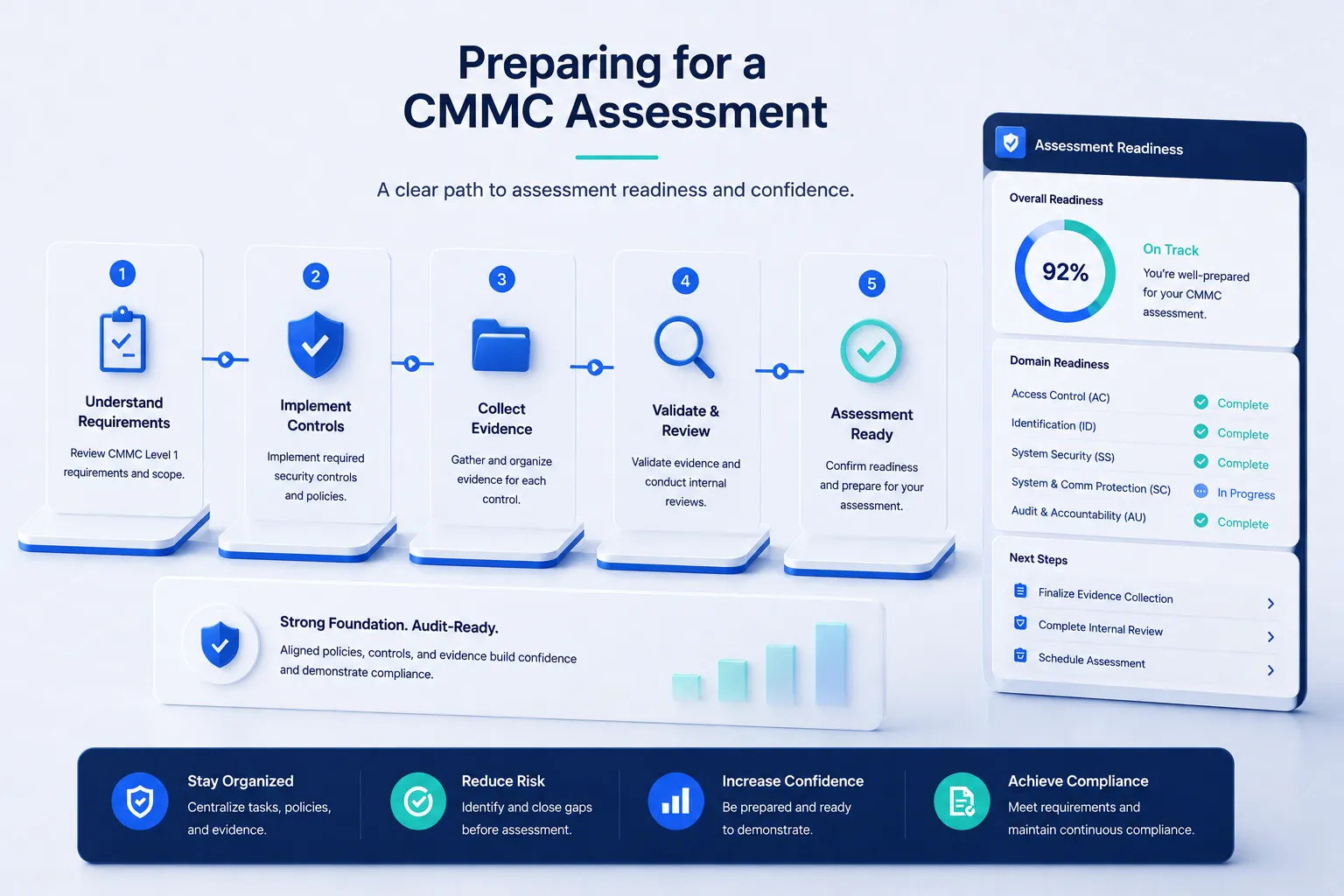
Phase 1: Gap Assessment (Weeks 1–3)
Before you can fix anything, you need to know where you actually stand. Start with an honest internal gap assessment across all relevant CMMC practices for your level.
Key questions for each practice:
- Do we have a written policy or procedure covering this?
- Is it implemented? In all systems? For all employees?
- Do we have evidence that could survive scrutiny from an outside assessor?
At this stage, resist the urge to minimize gaps. Every gap you identify internally is one you can remediate. Every gap the assessor finds is one that goes on your score.
Document everything in a centralized tracker — a spreadsheet works if you’re disciplined, but it gets messy fast, especially once you’re attaching evidence files and tracking remediation status.
Phase 2: Remediation Planning (Weeks 3–6)
Not all gaps are equal. Prioritize remediation based on:
- Risk to assessment outcome — high-confidence findings that will definitely result in a failing score
- Effort to fix — some gaps have a quick technical fix; others require policy development, training, and behavioral change
- Dependencies — some controls require others to be implemented first
Work backward from your assessment date. If standing up MFA across all systems takes six weeks, that needs to be started on day one, not month three.
A common mistake is spending too much time writing beautiful policies without implementing the underlying technical controls. Policies support evidence — they don’t replace it.
Phase 3: Evidence Collection (Ongoing from Week 2)
Start collecting evidence immediately and continuously. Don’t wait until the week before the assessment.
Evidence for each practice should tell a clear story:
- What the control is (reference to the policy or procedure)
- How it’s implemented (screenshots, configuration exports, system reports)
- When it was verified (timestamps matter enormously)
- Who is responsible (named owners, not just department names)
Evidence that’s two years old raises questions. Evidence from last week is much more credible. Build a habit of capturing and storing evidence on an ongoing basis, not as a one-time event.
Phase 4: Internal Readiness Review (2–3 Weeks Before)
About three weeks before your assessment, do a mock walkthrough with someone who wasn’t involved in the remediation work. Fresh eyes catch gaps that your team has become blind to.
Walk through each practice as if you’re the assessor:
- Can you locate the relevant policy in under 60 seconds?
- Does the evidence actually demonstrate what the control says it does?
- Is the evidence clearly labeled and organized, or does it require explanation?
Assessors are not going to dig through a folder of 200 unlabeled screenshots. Your evidence package needs to be navigable.
What Proofyx Does for This Process
The manual version of everything above involves spreadsheets, shared drives, email threads, and a lot of anxiety. Proofyx was built to replace that workflow.
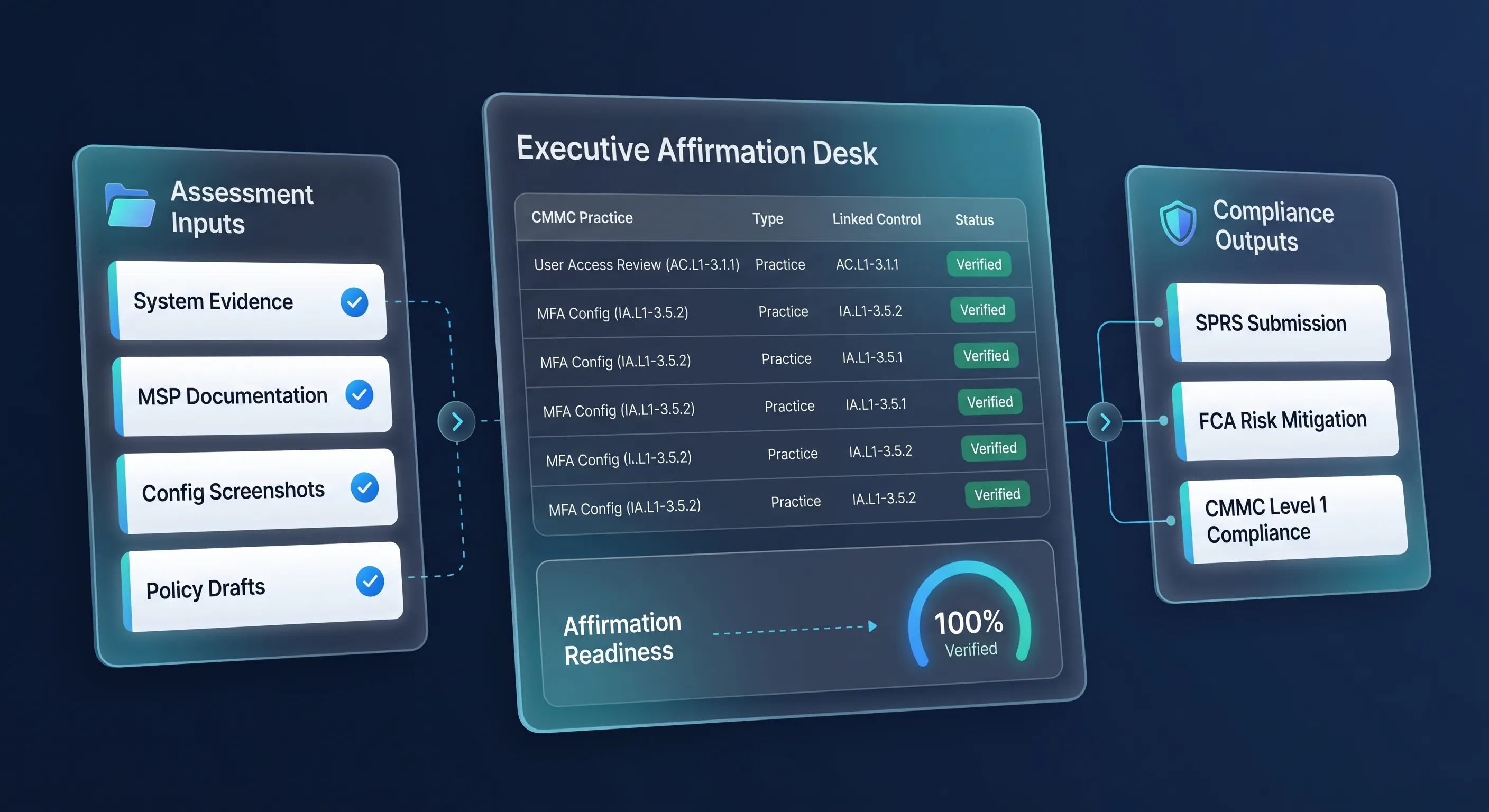
You map your practices to the relevant framework, attach evidence files directly to the controls they support, assign ownership, and track status in real time. When the assessment arrives, you’re not assembling a package — you’re sharing access to a system that’s already organized.
The more consequential benefit is what happens after the assessment. If you implement changes, you have a record of when and why. If a new regulation requires updating your controls next year, you’re not starting from scratch.
One final note: the time to start preparing is not when you have a scheduled assessment. It’s now, before the contract is on the line. The organizations that tend to do well are the ones who treat compliance as an operational practice, not a periodic project.
Build your audit-ready proof with Proofyx
Automate evidence collection and policy management — always prepared for your next audit.
Proofyx Editorial Team
Compliance Intelligence
Expert analysis and regulatory guidance for organizations navigating modern compliance frameworks.