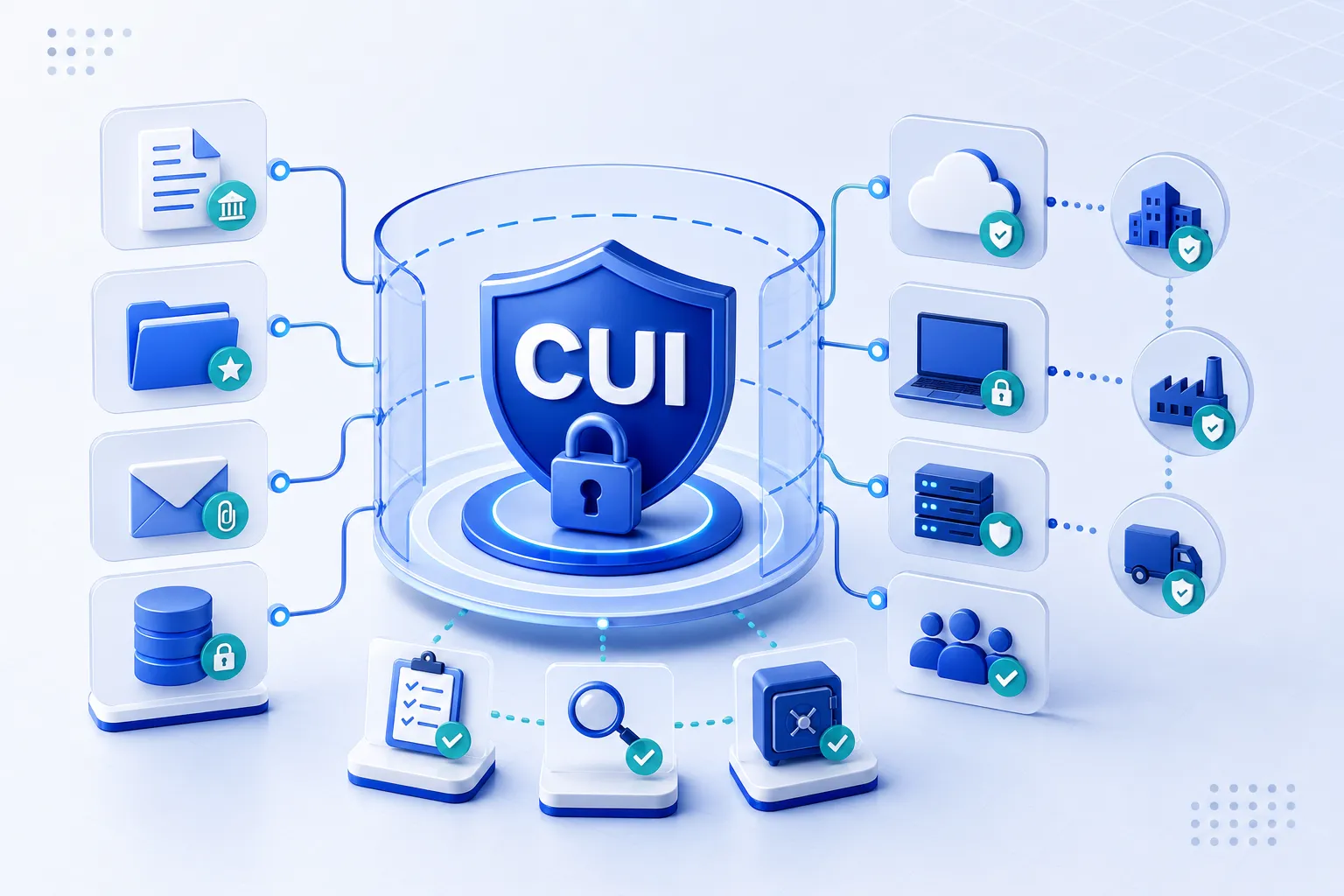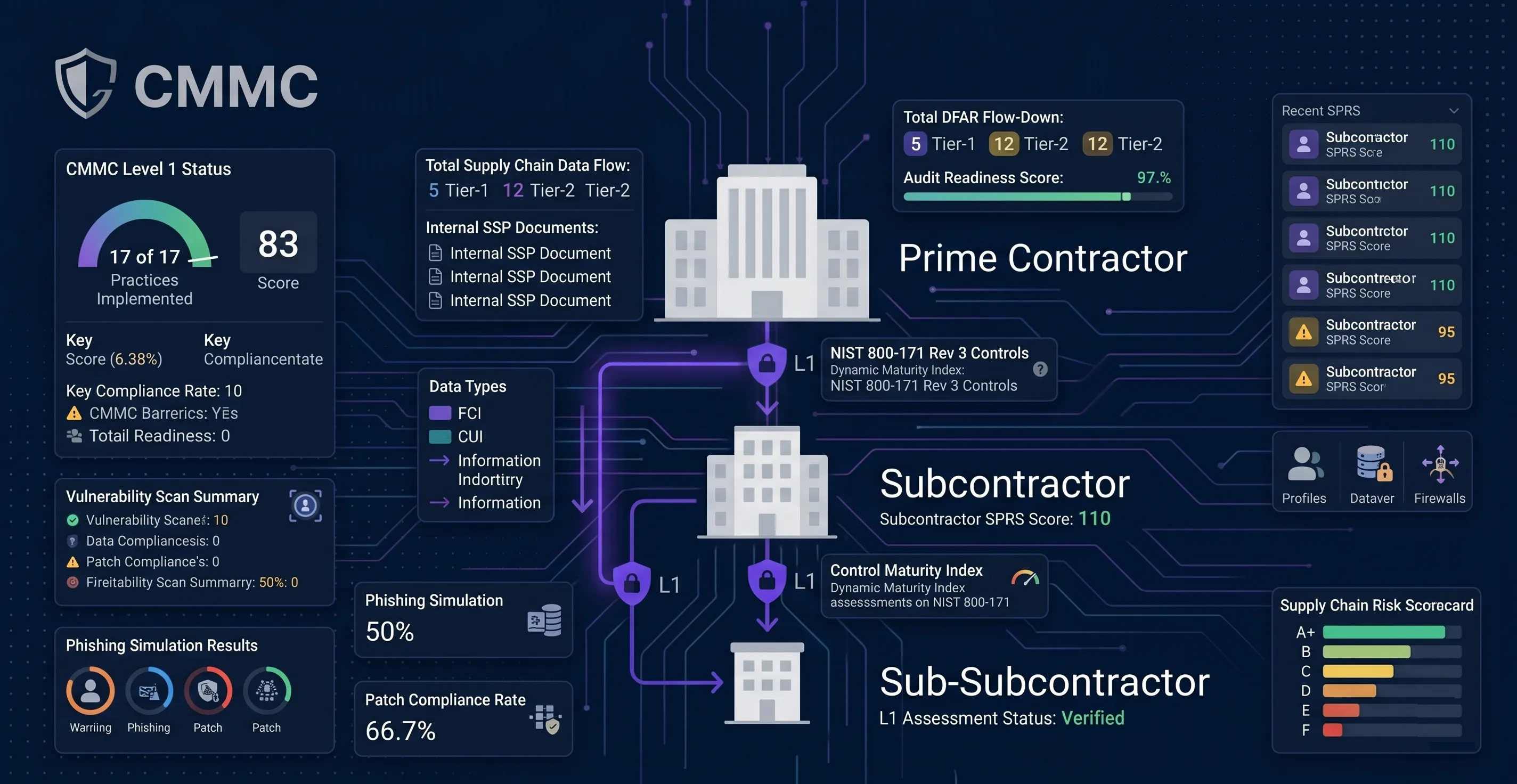
Most small business owners who hold Department of Defense contracts think of CMMC as an IT problem. Something for the tech team to sort out, a form to file, a box to check before the contract gets awarded. That’s understandable — the language around cybersecurity compliance can feel technical and distant from day-to-day business decisions.
But there’s one part of the CMMC process that lands squarely on the executive’s desk. And it’s worth understanding before you sign.
A Quick Recap: What the CMMC Self-Assessment Actually Is
CMMC — the Cybersecurity Maturity Model Certification — is the Department of Defense’s framework for ensuring that companies handling government contract information have basic cybersecurity practices in place. Level 1, which applies to most small businesses in the defense supply chain, covers 17 straightforward practices. Things like making sure only authorized people can access your systems, keeping antivirus software updated, and having a process for revoking access when someone leaves the company.
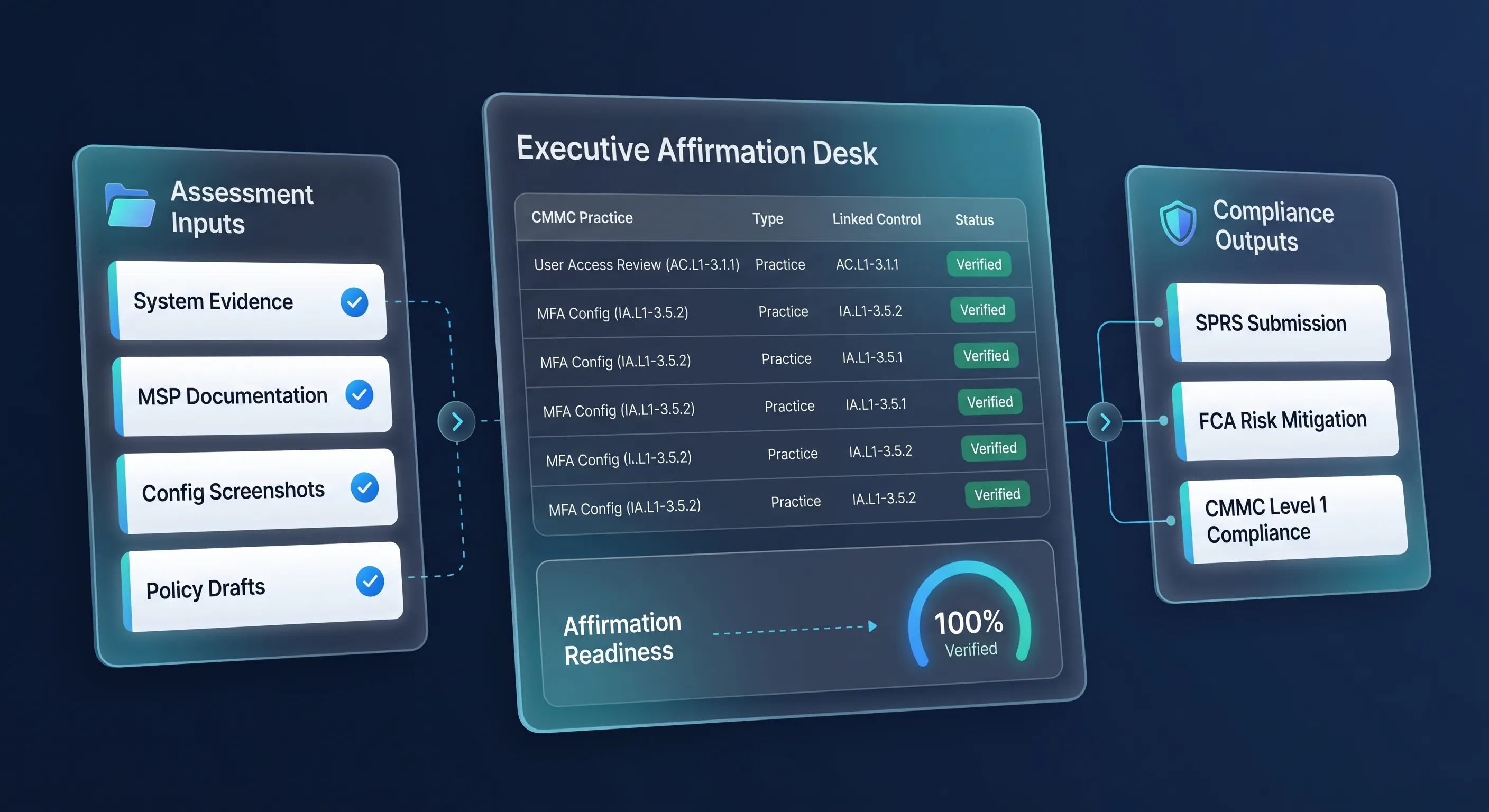
Once a year, your company evaluates itself against those 17 practices, records a score in a federal system called SPRS (Supplier Performance Risk System), and a senior company official signs an affirmation confirming the results are accurate.
That affirmation is where the legal dimension enters the picture.
Why the Signature Matters More Than Most People Realize
When you sign the annual affirmation, you’re not just confirming that your IT is in order. You’re making a legal representation to the federal government that your company is meeting its contractual cybersecurity obligations.
This matters because of a law called the False Claims Act — a federal statute that holds contractors accountable for knowingly submitting false statements to the government. It’s been around since the Civil War, originally associated with billing fraud and overcharging for equipment. Cybersecurity has only recently become part of its scope.
In 2021, the DOJ launched a Civil Cyber-Fraud Initiative specifically to address contractors who misrepresent their cybersecurity compliance. Enforcement has picked up meaningfully since then, and the cases that have resulted in settlements share a common pattern: none involved an actual data breach. The issue in each case was the gap between what was claimed and what was actually implemented.
The key thing to understand is that the False Claims Act covers not just intentional misrepresentation, but also what the law calls “reckless disregard for the truth” — meaning that signing off without really knowing what you’re signing can itself create legal exposure.
What “Reckless Disregard” Looks Like in Practice
You don’t have to intend to mislead anyone. But if your IT team or managed services provider assembles the self-assessment and you sign it without reviewing the underlying evidence, there’s a question of whether you truly knew what you were affirming. If gaps surface later — an account that was never deactivated, a device never enrolled in antivirus, a physical access log that never existed — the question becomes: did the executive who signed know, or should they have known?
That’s a meaningful distinction from simply making a good-faith mistake.
The practical implication isn’t that you need to become a cybersecurity expert. It’s that you should be able to say, at a basic level, that you’ve seen the evidence behind each of the 17 practices. Not in technical detail — just enough to say: “Yes, I’ve reviewed this, and I’m confident it reflects our actual state.”
Build a Culture Where Gaps Surface Early
There’s one more piece of the False Claims Act worth knowing: private individuals — including current and former employees — can file a complaint on the government’s behalf under what’s called a “qui tam” provision. Several cybersecurity cases in recent years originated from complaints filed by former employees who had direct knowledge of compliance gaps.
This isn’t a reason to be paranoid about your staff. Most people who notice a gap will raise it internally before anything else. The more practical takeaway is that your GRC (governance, risk, and compliance) culture matters. When employees feel comfortable flagging concerns internally, those concerns get resolved early — when they’re much easier to fix.
The Government Rewards Honesty
Here’s the part that often gets lost: the government is not trying to penalize small businesses for having compliance gaps. It’s trying to hold contractors accountable for pretending they don’t have them.
If your self-assessment surfaces a gap you can’t immediately close, the right move is to document it and create a remediation plan — not paper over it. A Plan of Action and Milestones (POA&M) is a recognized part of the CMMC process precisely because perfect compliance on day one isn’t always realistic. Using that mechanism honestly is exactly what it’s designed for. Voluntary disclosure and cooperation are consistently treated as meaningful factors in how these situations resolve.
A Few Questions Worth Asking Before You Sign
You don’t need a legal background or deep technical knowledge to sign your CMMC self-assessment responsibly. You do need honest answers to a few questions:
Have I actually reviewed the evidence — not just the score — for each of the 17 practices? Even a brief walkthrough with whoever assembled the assessment counts.
Are any gaps documented, with a remediation plan attached?
Does my IT provider’s approach actually satisfy the relevant controls, and do I have that confirmed in writing? Third-party risk is real — your compliance posture includes theirs.
Would I be comfortable walking an outside auditor through this assessment in plain terms?
If yes: you’re in a reasonable position to sign. If not: ask more questions first.
The Bottom Line
CMMC Level 1 is genuinely achievable for small businesses. The 17 practices aren’t complex, and the self-assessment pathway keeps the process manageable. None of this needs to be overwhelming.
What’s worth taking seriously is that the affirmation you sign carries real legal weight — not because the government is looking for reasons to come after small businesses, but because cybersecurity representations in federal contracting are now treated with the same seriousness as financial ones. The standard isn’t perfection. It’s honesty, documentation, and understanding what you’re signing.
That’s well within reach.
Build your audit-ready proof with Proofyx
Automate evidence collection and policy management — always prepared for your next audit.
Proofyx Editorial Team
Compliance Intelligence
Expert analysis and regulatory guidance for organizations navigating modern compliance frameworks.